Home Based Rehabilitation in Europe 2026

How Hybrid Tech Reduces EU Healthcare Costs
November 3, 2025
From Clinic to Living Room: The Rise of Home Based Rehabilitation in Europe
Why Rehabilitation Is No Longer Limited to Clinics
Across Europe, rehabilitation is undergoing a quiet but fundamental transformation. What was once almost exclusively delivered inside clinics and hospitals is increasingly moving into patients’ homes. This shift is not driven by convenience alone it reflects deeper structural changes in European healthcare systems.
Ageing populations, rising rates of musculoskeletal disorders, workforce shortages in physiotherapy, and growing healthcare costs have pushed policymakers and providers to rethink how and where rehabilitation should take place. At the same time, patients themselves are demanding more flexible, accessible, and personalized recovery pathways.
The result is a growing emphasis on home based rehabilitation, supported by digital health technologies and remote supervision models.
European Health Policies Accelerating Home Based Care
The expansion of home based rehabilitation is closely aligned with broader European health policy goals. Initiatives such as the EU4Health Programme (2021–2027) promote prevention, digital health infrastructure, and decentralized care models that reduce unnecessary hospital visits.
At the national level, countries like the Netherlands and Denmark are at the forefront of this transition. In the Netherlands, the principle of “Right Care, Right Place” emphasizes delivering care in the least intensive setting possible often the patient’s own home. Similarly, Denmark’s healthcare reforms are investing heavily in near care solutions and digital tools that support rehabilitation outside traditional clinical environments.
These policies signal a clear direction: rehabilitation should be closer to everyday life, without compromising clinical quality or patient safety.
The Real Challenges of Rehabilitation at Home
Despite its promise, home based rehabilitation is not without challenges. One of the most persistent concerns among physiotherapists is the lack of direct supervision. When patients perform exercises independently, incorrect movement patterns, poor adherence, and reduced motivation can undermine recovery outcomes.
Traditional home exercise programs often delivered through printed instructions or pre recorded videos offer limited feedback and cannot adapt to individual progress. This gap between clinical guidance and real world execution remains a major barrier to scaling home rehabilitation safely.
For home based rehabilitation to be effective, it must address a fundamental question:
How can professional judgment extend beyond the clinic walls?

The Role of Digital Technology in Modern Rehabilitation
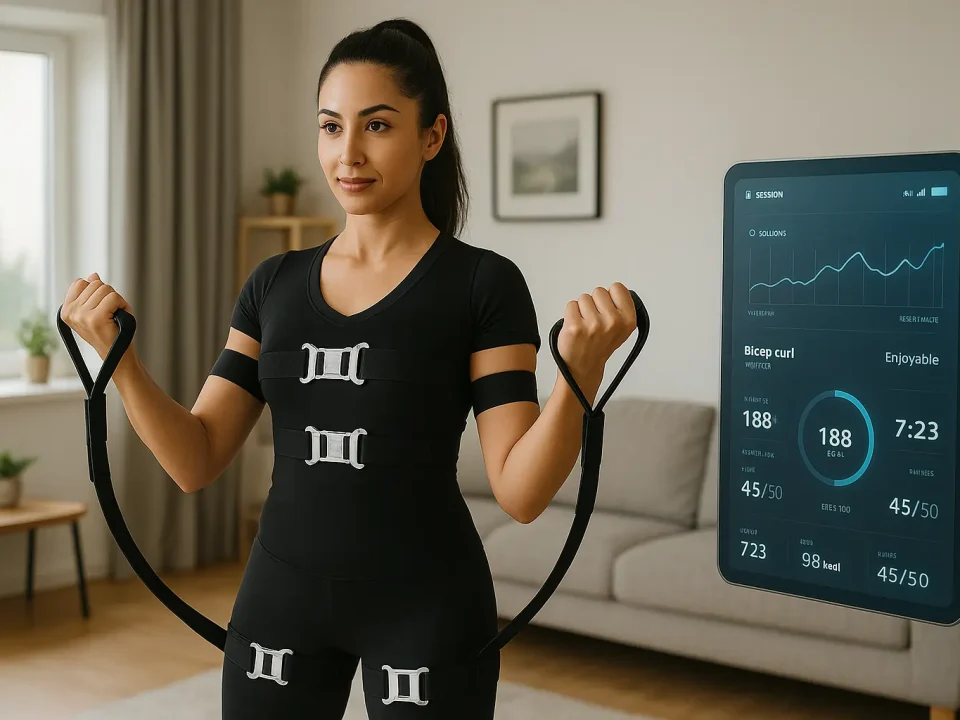
Digital health technologies are increasingly answering this question. Wearable sensors, intelligent software, and real time motion analysis now make it possible to monitor movement quality, exercise adherence, and functional progress remotely.
Rather than replacing clinicians, these tools act as an extension of professional expertise. By capturing detailed biomechanical data and translating it into actionable feedback, modern rehabilitation technologies can support patients during home sessions while keeping clinicians informed and in control.
This shift transforms home rehabilitation from a static set of instructions into a dynamic, data informed process one that evolves with each patient’s recovery journey.
What This Means for Physiotherapists and Rehabilitation Centers
For clinicians and rehabilitation providers, home based models offer both relief and opportunity. Remote monitoring can reduce the burden of repetitive in clinic sessions, allowing therapists to focus on complex cases while still maintaining oversight of patients at home.
Data driven insights enable more informed clinical decisions, improve continuity of care, and support outcome based rehabilitation strategies. Importantly, when home exercises are executed correctly and consistently, overall recovery efficiency improves benefiting both patients and healthcare systems.
The Future of Rehabilitation in Europe
Looking ahead, the future of rehabilitation in Europe is likely to be hybrid. Clinics will remain essential, particularly for assessment and high risk patients, but home based rehabilitation will increasingly serve as a structured continuation of care.
As artificial intelligence, wearable technology, and evidence based personalization mature, trust in home rehabilitation models will continue to grow. The goal is not to move care away from professionals, but to make professional guidance present wherever recovery happens.
In this evolving landscape, rehabilitation is no longer confined to clinical spaces it is becoming an integrated part of daily life.
Scientific References