
How Hybrid Tech Reduces EU Healthcare Costs

Smart Resistance Bands for Muscle Injury Rehabilitation: Challenges & Opportunities
November 3, 2025
Home Based Rehabilitation in Europe 2026
February 10, 2026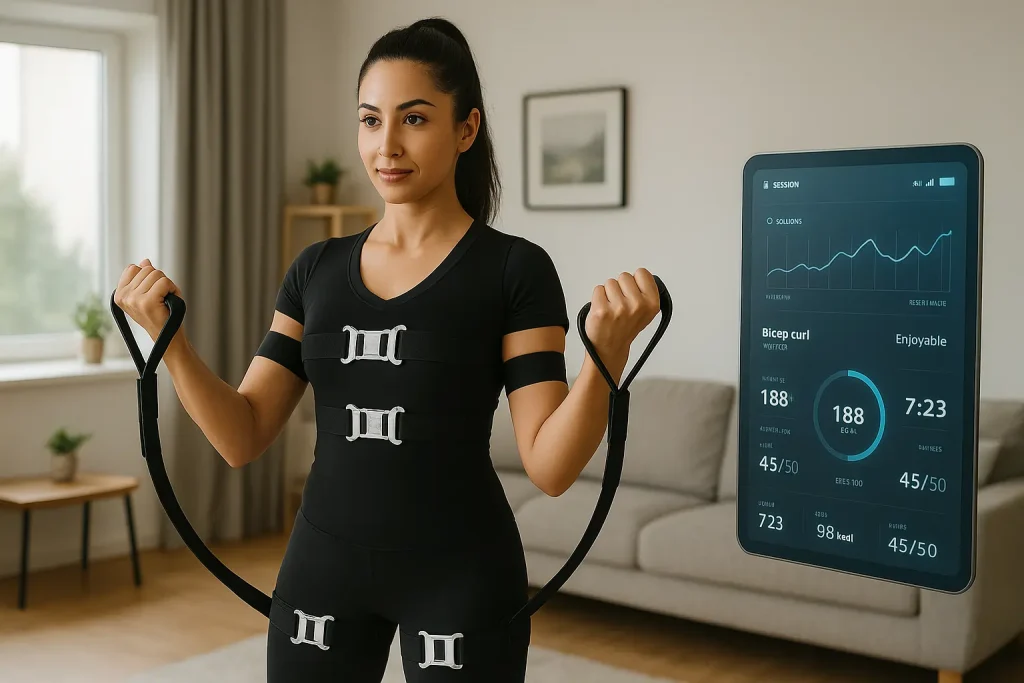
Reduces EU Healthcare Costs: How a Hardware-Software Hybrid Product Makes It Possible
Target Keywords: hybrid healthcare solutions Europe, reduce healthcare costs Europe, smart rehabilitation device, remote patient monitoring Europe, value-based care technology, TopCycle.
The sustainability of European healthcare systems is under unprecedented strain. An aging population, the rising prevalence of chronic diseases, and the high cost of traditional rehabilitation services are pushing budgets to their limits. In this challenging landscape, a new category of solution is emerging as a powerful tool for cost containment and improved outcomes: hardware-software hybrid products.
This article analyzes how integrated solutions—like the TopCycle smart resistance band and its AI-driven platform—offer a tangible path to reducing healthcare expenditures without compromising patient care. From a strategic leadership perspective, we will explore the mechanisms of cost reduction, the essential business models, and the evidence supporting this transformative approach.
The Financial Burden of Traditional Rehabilitation
Rehabilitation in Europe has long been anchored in clinic-based, in-person sessions. This model is inherently:
-
Labour-intensive, requiring significant therapist time.
-
Costly, involving overheads for facilities and administration.
-
Inconvenient for patients, creating barriers like travel time and scheduling conflicts.
These challenges often lead to suboptimal adherence, slower recovery, and higher long-term costs. Hybrid technology is poised to disrupt this model by moving a significant portion of care to the patient’s home, supported by intelligent, connected devices.
5 Ways Hybrid Technology Cuts Healthcare Costs
1. Drastically Reducing In-Person Visits
By enabling accurate remote patient monitoring, hybrid products allow clinicians to supervise rehabilitation safely from a distance. Patients can perform prescribed exercises at home, with the system tracking their movement, reps, and form.
-
Evidence: A 2023 systematic review in Digital Health found that remote monitoring with wearable devices could reduce outpatient visits by up to 30% without negatively affecting clinical outcomes.
2. Boosting Patient Adherence and Engagement
Poor adherence is a primary reason for rehabilitation failure. TopCycle’s hybrid model tackles this head-on with gamified feedback, automated reminders, and AI-powered coaching. This creates a more engaging and accountable experience for the patient, leading to better compliance and, consequently, faster recovery.
3. Delivering Truly Personalized Care
Generic exercise plans are often inefficient. The AI software in a hybrid system analyzes real-time sensor data to personalize the rehabilitation program for each user. It can automatically adjust exercise intensity, suggest progressions, and identify which exercises are most effective, optimizing the therapy timeline and reducing wasted sessions.
4. Enabling Early Complication Detection
Continuous monitoring provides a stream of data that can flag deviations from the expected recovery trajectory. A clinician can be alerted if a patient’s form deteriorates or they report increased pain, allowing for early intervention. This proactive approach prevents minor issues from escalating into costly complications, emergencies, or hospital readmissions.
5. Facilitating Data-Driven Resource Allocation
On a systemic level, the aggregated and anonymized data from hybrid devices provides invaluable insights. Healthcare providers can identify patient cohorts that require more intensive support versus those who are progressing well independently. This allows for smarter resource allocation, ensuring that expensive clinical time is directed where it is needed most.
The CEO’s Blueprint for Success in the European Market
Deploying a successful hybrid health product requires more than just great technology. It demands a strategic approach to the healthcare ecosystem.
-
Forge Strategic Clinical Partnerships: Success hinges on integration into clinical pathways. At TopCycle, we collaborate directly with physiotherapy clinics and hospitals to validate our protocols, ensuring our product fits seamlessly into existing workflows and earns the trust of practitioners.
-
Navigate Reimbursement with Value-Based Evidence: European payers are increasingly shifting towards value-based healthcare models. Demonstrating clear, data-backed proof of cost savings—such as reduced number of sessions per patient or lower hospitalization rates—is critical for securing reimbursement codes.
-
Build an Integrated Ecosystem: A hybrid product cannot be an isolated “gadget.” Its full value is realized through integration with Electronic Medical Records (EMRs), telehealth platforms, and provider dashboards. This seamless connectivity maximizes the return on investment for healthcare institutions.
-
Adopt a Hybrid Revenue Model: A sustainable business model often combines a one-time fee for the smart hardware with a recurring subscription for the intelligent software, analytics, and support services. This ensures continuous improvement and long-term patient engagement.
Evidence and Case Studies: The Proof is in the Data
The theoretical benefits of hybrid health solutions are being confirmed in practice:
-
A 2023 study published in PM&R found that home-based telerehabilitation using smart resistance bands reduced required physical therapy sessions by 25-35% while maintaining equivalent functional outcomes.
-
Research into AI-guided exercise programs for post-stroke patients consistently shows higher adherence rates and faster improvements in mobility compared to standard care.
-
Clinics that have adopted hybrid models report not only cost savings, but also reduced administrative burden and higher patient satisfaction scores.
Conclusion: A Sustainable Path Forward for European Healthcare
The economic pressure on European healthcare is not abating. Hardware-software hybrid products represent a pragmatic, scalable, and effective solution to deliver high-quality care more efficiently.
By reducing in-person visits, improving adherence, personalizing therapy, and enabling proactive care, technology like the TopCycle smart band delivers measurable economic benefits. From a leadership standpoint, the path forward is clear: focus on clinical validation, secure reimbursement through robust evidence, and build an integrated ecosystem that serves patients, providers, and payers alike.
The future of cost-effective, high-outcome rehabilitation in Europe is hybrid.
References & Further Reading
-
Toh S.F.M., et al. (2023). Usability of a wearable device for home-based upper limb telerehabilitation. PM&R.
-
Rodgers M., et al. (2019). Wearable technologies for active living and rehabilitation. Journal of NeuroEngineering and Rehabilitation.
-
Hoff T., et al. (2024). Patient experience with wearable technology: Scoping review. Digital Health.
-
Farabolini G., et al. (2025). Continuous movement monitoring at home through wearable sensors: A systematic review. Sensors.